
Solar Panel Battery Storage UK: Is a Solar Battery Worth It in 2026?
Is a solar battery worth it in the UK? A battery's value depends on when you use electricity. Here's how sizing, grid charging, EVs and export tariffs decide the answer for your property.

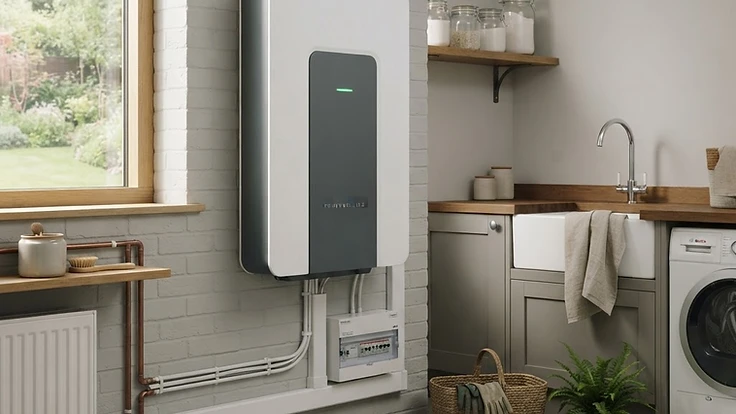
Updated September 2026 | Make Green Energy
Solar panels are only half of the conversation.
Across the UK, more homeowners are now searching for solar panel battery storage, and there is a simple reason why.
Your solar panels might produce electricity at 1pm. But what happens when you actually need that electricity at 7pm?
Without battery storage, surplus electricity that you don't use can be exported to the grid. With a correctly designed solar battery system, some of that energy can instead be stored for later use.
But does that mean everyone installing solar panels should buy a battery? Not necessarily. Here's what you need to know before spending thousands of pounds on solar and battery storage.
What Is Solar Panel Battery Storage?
Think of your solar panels as the generator. Think of the battery as the storage tank.
During daylight hours, your solar PV system generates electricity. Your home uses the electricity it needs first. Depending on the system configuration, surplus generation can then potentially charge your battery. Later, when solar generation falls and your household still requires electricity, stored energy can be discharged from the battery.
A simplified day might look like this:
That can increase the proportion of your own solar electricity that you actually use.
But here's where many solar buyers make a mistake.
Bigger Battery ≠ Better Solar System
It's tempting to compare batteries by capacity alone. 5kWh. 10kWh. 15kWh. 20kWh. The biggest number can look like the best investment.
But the important question isn't "how big a battery can I buy?" It's: "how much storage does my property actually need?"
Imagine buying a large battery that your solar array rarely produces enough surplus electricity to fully charge. You've paid for storage capacity you're barely using.
Now imagine installing a battery that's too small for a household with significant evening electricity consumption. Potential solar energy that could have been stored may instead be exported.
Battery sizing should follow your energy profile — not a sales target.
Is Solar Battery Storage Worth It in the UK?
For some households, battery storage can significantly improve how they use the electricity their solar panels generate. For others, the financial case may be less compelling.
The answer depends heavily on when you consume electricity. Consider these two homes.
Home A — High Daytime Consumption
Someone works from home. The washing machine, dishwasher and other appliances regularly operate during the day. Solar generation coincides with significant electricity consumption. This household may already use a substantial amount of its solar electricity directly.
Home B — High Evening Consumption
The property is largely empty during the working day. Everyone returns home around 5–6pm. Cooking starts. The washing machine goes on. TVs, computers and appliances are being used. An EV might be plugged in. But solar generation is now falling. Battery storage could play a very different role in this property.
Same solar panels. Different consumption pattern. Different battery requirement.
That's why Make Green Energy assesses energy usage before recommending battery capacity.
Can You Add a Battery to Existing Solar Panels?
In many cases, yes. You don't necessarily have to replace an existing solar PV system simply because it doesn't currently have battery storage. Depending on your existing equipment and system configuration, battery storage may be retrofitted.
However, compatibility matters. An installer needs to consider factors such as:
- your existing inverter
- solar array capacity
- electrical configuration
- available installation space
- household consumption
- battery technology
- desired storage capacity
If you already have solar panels but find yourself exporting substantial amounts of electricity during the day and buying electricity back later, it may be worth assessing whether battery storage could improve how your system operates. Already have solar? Ask Make Green Energy for a solar battery assessment — we can review your existing system and help determine whether adding battery storage makes sense.
How Much Solar Battery Storage Do I Need?
There's no universal answer. Battery capacity is normally measured in kilowatt-hours (kWh). But choosing a battery isn't simply about matching its capacity to your total daily electricity consumption.
An installer should consider:
- Your annual electricity consumption — how much electricity does the property use?
- When you consume electricity — daytime and evening consumption create very different storage requirements.
- Your solar array size — how much electricity can the panels realistically generate?
- Surplus solar generation — how much energy is available to charge the battery after the property has consumed what it needs?
- Battery charge/discharge capability — capacity isn't the only specification that matters.
- Future electricity consumption — planning an EV, heat pump, home extension or more occupants? Your future energy profile could look very different from today's.
What Happens When Your Solar Battery Is Full?
Imagine your solar panels are generating electricity. Your home doesn't currently need all of it. Your battery reaches full charge. What happens next?
Depending on your system and tariff arrangements, surplus electricity can potentially be exported to the grid. Eligible households may receive payments for exported renewable electricity through a Smart Export Guarantee tariff.
So your solar electricity broadly has three possible destinations:
A well-designed system considers the relationship between all three.
Can a Solar Battery Charge From the Grid?
Some battery systems can also be configured to charge using grid electricity.
Why would you do that? Because some electricity tariffs offer cheaper electricity during particular off-peak periods. A compatible battery and tariff arrangement may allow electricity to be stored when grid electricity is cheaper and then used later when electricity would otherwise cost more.
This changes the conversation around batteries. A battery isn't necessarily useful only when the sun is shining. It can become part of a broader home-energy-management strategy.
However, tariffs, equipment compatibility and household consumption all need to be considered carefully before calculating potential savings.
Solar Panels + Battery + EV: Where Things Get Interesting
Now imagine the same home has solar panels, battery storage and an electric vehicle. The property's electricity profile has changed dramatically. An EV can represent a significant new electricity demand.
Simply adding more battery capacity isn't automatically the solution. Instead, the solar array, battery, EV charging pattern and electricity tariff should be considered together.
For example, the system may need to determine when it makes more sense to power the house, charge the battery, charge the EV or export surplus electricity.
The goal isn't simply generating the most solar electricity possible. It's using each unit of electricity intelligently. See our guide to EV charger installation for more on how EVs fit into the picture.
What About Solar Battery Storage for Businesses?
Battery storage isn't exclusively a residential technology. Businesses increasingly need to think about when electricity is consumed, when solar is generating and how energy demand changes throughout the working day.
For a commercial site, this analysis can include half-hourly electricity data, daytime baseload, peak demand, the solar generation profile, battery capacity, EV charging, future expansion and export potential.
Consider a warehouse with a large solar array. If most of the electricity generated is immediately consumed by machinery, lighting and equipment during working hours, the role of a battery may be very different from a site generating substantial surplus electricity.
That's why commercial solar battery design should begin with data, not equipment.
Should You Install Solar Panels Without a Battery?
Absolutely — where the property and economics support it.
Solar panels don't suddenly become ineffective because there isn't a battery attached. If your property consumes significant electricity while the panels are generating, solar alone can still provide considerable value. You may also be able to export eligible surplus electricity.
Battery storage is an additional tool. Not an automatic requirement.
That's an important distinction because homeowners shouldn't be pressured into buying equipment they don't need simply to increase the value of an installation.
What Should You Ask Before Buying a Solar Battery?
Before accepting a solar and battery quotation, ask your installer: how was this battery size calculated? If the answer is simply "that's the battery we normally install", ask more questions.
You should understand:
- estimated annual solar generation
- estimated household consumption
- expected self-consumption
- estimated surplus generation
- usable battery capacity
- charge/discharge power
- expected battery usage
- warranty terms
- inverter compatibility
- monitoring capabilities
And perhaps most importantly: ask what happens financially if you choose a smaller or larger battery. A credible solar company should be able to explain the reasoning behind the system.
Don't Buy Solar Panels and a Battery Until You Know These 5 Numbers
Before deciding, understand:
Check your electricity bill, work out when you're actually using electricity, and ask what your proposed array could generate, how much you could use directly and how much could realistically be available for storage or export.
Those five numbers tell you far more than a battery brochure.
So, Is Solar Panel Battery Storage Worth It in 2026?
It can be. But the battery needs to fit the property.
The real opportunity with solar isn't simply covering a roof with panels and installing the biggest battery available. It's creating an energy system around how you actually live.
Generate when daylight is available. Use electricity directly where possible. Store appropriate surplus energy. Export eligible excess generation. And potentially use smart tariffs to optimise how electricity moves between your property, battery and grid.
That's the difference between simply owning solar equipment and having a properly designed energy system.
Find Out What Battery Size Your Property Actually Needs
Thinking about installing solar panels and battery storage? Or already have solar and wondering whether adding a battery makes sense? Don't guess.
Make Green Energy can assess your electricity consumption, roof and solar potential, daytime vs evening usage, existing solar system, battery requirements, EV charging requirements, potential solar generation and storage and export options. Then we can design a solar and battery solution around your property.
Get Your Free Solar Assessment
Don't guess what solar could save you — let's calculate it around your actual property.
- Whether your property is suitable for solar
- What size system may be appropriate
- Whether battery storage makes sense
- Potential electricity generation
- Potential savings and export opportunities
- Available installation options
Related Insights
This article is part of our series helping UK households get more from solar:
- How Much Do Solar Panels Cost in the UK in 2026? — prices, finance and what you should actually pay
- Solar Panels UK in 2026: Cost, Batteries, Cleaning & What Homeowners Should Know — the complete 2026 guide
- Solar Is Getting Cheaper. So Why Is the Grid Becoming the Bigger Challenge? — costs vs grid strategy
- Do Solar Panels Need Cleaning? The UK Solar Owner's Guide for 2026 — protecting your investment
Explore our latest insights, or read more about battery storage, domestic solar and commercial solar.
About Make Green Energy
Make Green Energy helps UK homeowners and businesses understand and access practical renewable-energy solutions, including solar PV, battery storage and energy-saving technologies. Our engineers design, install and support systems built around your property and long-term energy goals.
References & Further Reading
Frequently Asked Questions
Ready to explore solar for your property?
Whether you're considering solar panels, battery storage or a more complete renewable-energy solution, Make Green Energy can help you understand your options.
Related articles

Do Solar Panels Need Cleaning? The UK Solar Owner's Guide for 2026
Rain, dust, pollen and bird droppings all land on your solar array — but does it actually need cleaning? The better question is whether your system is performing as expected, and here's how to tell.

Solar Panels UK in 2026: Cost, Batteries, Cleaning & What Homeowners Should Know Before Installing
How much do solar panels cost in the UK in 2026? Do you need a battery — and do panels work when it's cloudy? An installer's guide to costs, payback, cleaning and the questions to ask before you buy.

How Much Do Solar Panels Cost in the UK in 2026? The Real Cost vs Savings
An average UK solar PV system costs around £7,600 — but the cheapest quote isn't the cheapest system to own. Real costs, savings, payback periods and how to compare quotes properly.