
Solar Panels UK in 2026: Cost, Batteries, Cleaning & What Homeowners Should Know Before Installing
How much do solar panels cost in the UK in 2026? Do you need a battery — and do panels work when it's cloudy? An installer's guide to costs, payback, cleaning and the questions to ask before you buy.
Updated: September 2026 | Make Green Energy
More UK homeowners are asking the same questions:
How much do solar panels cost?
Do I need a solar battery?
Do solar panels actually work well in the UK?
And should solar panels be cleaned?
Those questions are becoming particularly relevant in 2026.
Recent UK search trends show growing interest around solar panel costs, solar panels and battery storage, solar panels for homes and solar panel cleaning.
So rather than giving you another sales pitch, this guide explains what you should actually consider before investing in solar.
How Much Do Solar Panels Cost in the UK in 2026?
There isn't one universal price for a solar installation.
Your final cost depends on several factors, including:
- the size of your property
- your electricity consumption
- the number and specification of panels
- roof size, pitch and orientation
- shading
- scaffolding and installation complexity
- inverter specification
- whether battery storage is included
As a broad benchmark, the Energy Saving Trust currently estimates that an average home solar panel system costs around £7,600 to install.
But price alone shouldn't determine which system you buy.
A cheaper system that isn't designed around how your household actually consumes electricity can potentially be a false economy.
The more important question is:
What solar system makes sense for your property?
At Make Green Energy, we look at the property, roof, electricity consumption and objectives before recommending a system.
Want to know what solar could look like for your property? Request a free solar assessment from Make Green Energy.
Solar Panels and Battery Storage: Do You Need Both?
This is another question receiving increasing attention from UK homeowners.
Solar panels generate electricity while daylight is available.
But households don't necessarily consume the most electricity at exactly the same time their panels are generating it.
That's where battery storage becomes interesting.
Instead of immediately exporting surplus solar electricity, a battery can store electricity so that it can potentially be used later.
For example: at 11:00am your panels are generating strongly — but at 6:30pm, solar generation is falling while your household electricity demand increases. A battery may allow some of the electricity generated earlier to be used during that evening period.
The Energy Saving Trust says battery storage can make households less reliant on grid electricity and provide greater flexibility as electricity tariffs change.
However, a battery isn't automatically the right financial decision for every property. Its value depends on factors such as:
- electricity consumption
- when you use electricity
- solar generation
- battery capacity
- electricity tariffs
- export rates
- whether you have an EV or heat pump
That's why simply buying the biggest battery available isn't necessarily the smartest approach.
The right battery should be designed around your energy profile
Do Solar Panels Work in the UK When It's Cloudy?
Yes.
Solar PV panels generate electricity from daylight, rather than requiring constant direct sunshine.
That means they can still generate electricity on cloudy days, although output naturally varies with conditions. The Energy Saving Trust confirms that solar panels can generate clean electricity even during cloudy weather.
And solar is already far from unusual in Britain. There are now nearly 1.7 million solar installations on UK homes, according to figures referenced by the Energy Saving Trust.
So the question increasingly isn't "Does solar work in Britain?" — it's "Would solar work financially and practically on my particular property?" That's something a proper assessment should establish before installation.
How Long Do Solar Panels Take to Pay for Themselves?
There is no single payback period that applies to every household. Location, electricity consumption, system design and export payments all matter.
However, the Energy Saving Trust's latest modelling gives an indication. Its July 2026 figures estimate solar payback periods, including export payments, at approximately:
| Location | Estimated payback period |
|---|---|
| London | around 9 years |
| Manchester | around 10–11 years |
| Aberystwyth | around 9–10 years |
| Stirling | around 11–12 years |
These are examples rather than guaranteed outcomes. Your results can differ significantly depending on your system and electricity usage.
That's why Make Green Energy recommends looking at projected generation, consumption and export rather than relying on generic savings claims.
Can You Get Paid for Electricity Your Solar Panels Generate?
Potentially, yes.
When your solar system produces electricity you aren't using or storing, surplus electricity can be exported to the grid.
The Smart Export Guarantee (SEG) requires participating electricity suppliers to offer payments to eligible small-scale generators for electricity exported to the National Grid. The actual tariff isn't fixed nationally — different suppliers can offer different rates, contract lengths and conditions.
This creates an important consideration when calculating solar returns. Your solar investment isn't only about how much electricity your panels generate. It's also about what happens to every kilowatt-hour they generate.
A well-designed system considers all three.
Solar Panel Cleaning: Do Solar Panels Actually Need Cleaning?
This is one of the fastest-growing solar questions in current UK searches.
And there's a reason. Look at enough older solar installations and you'll eventually see panels affected by:
- bird droppings
- dust
- pollen
- leaves
- lichen
- dirt and environmental deposits
The good news is that solar panels generally require relatively little maintenance. Rain naturally removes much of the everyday dirt from tilted rooftop panels.
However, rain doesn't necessarily remove everything. The Energy Saving Trust recommends inspecting panels periodically and says a light clean approximately every 12–24 months can help where dirt has accumulated. Properties near busy roads, farmland, trees or particularly dusty environments may require more frequent attention.
Why does cleanliness matter?
Solar panels need light to reach their photovoltaic cells. A significant build-up of dirt or debris can obstruct that light and affect generation.
So if you've already invested thousands of pounds into solar, occasionally checking the condition of the array makes sense.
Don't Pressure-Wash Your Solar Panels
This deserves its own section.
A pressure washer should not be used on solar panels. High-pressure water can potentially interfere with seals and electrical components.
You also shouldn't walk on panels. And climbing onto a roof without suitable equipment and training creates an obvious safety risk.
For difficult-to-access rooftop installations, professional inspection or cleaning is the safer option.
Already Have Solar? Watch Your Generation
One of the easiest ways to identify a potential problem isn't necessarily looking at the roof. It's looking at your monitoring data.
If your system's generation appears unexpectedly low compared with similar conditions or previous performance, it may justify further investigation. The cause won't necessarily be dirty panels — potential issues can include shading, inverter problems, component faults or changes elsewhere in the system.
That's why monitoring solar generation matters after installation. Installing solar shouldn't be the end of the relationship with your system. It should be the beginning of understanding how your property produces and consumes energy.
What Are the Best Solar Panels in the UK?
Searching for the "best solar panels" can quickly become confusing. You'll encounter different:
- manufacturers
- efficiencies
- panel technologies
- warranties
- degradation rates
- sizes
- power outputs
- aesthetics
- price points
But there isn't necessarily one panel that's universally best. A high-powered panel isn't automatically the right panel for every roof.
The system needs to work together. That means considering the relationship between:
Panels + inverter + roof + shading + battery + household consumption + tariff.
That's why Make Green Energy focuses on system design rather than simply selling a particular panel.
Solar Panels for Home: What Should You Check Before Buying?
Before accepting a solar quotation, ask these questions:
- How much electricity should the system generate annually?
- How much of that electricity am I expected to use myself?
- How much could be exported?
- Is battery storage appropriate for my consumption?
- Why has this particular panel and inverter been specified?
- What warranties are included?
- How will shading affect generation?
- Who is actually installing the system?
- What happens if something goes wrong after installation?
- Is the installer MCS certified?
The Energy Saving Trust recommends obtaining quotes from multiple installers and checking that installers are MCS certified.
A solar installation can operate for decades. Taking additional time to understand the design before signing a contract is worth it.
What About Plug-In Solar Panels?
There's another reason solar searches have accelerated recently.
Plug-in solar panels became available for use in Great Britain from 27 August 2026.
These smaller systems are very different from a conventional professionally installed rooftop solar array. According to the Energy Saving Trust, plug-in systems can cost from around £450 and could reduce electricity bills by roughly £70–£100 per year, depending on circumstances.
They may appeal particularly to people looking for a smaller entry point into solar.
But homeowners comparing plug-in solar with a full rooftop system should understand that they aren't equivalent products. A full solar PV system can be designed around the property's wider electricity requirements and integrated with technologies such as battery storage and EV charging.
Solar Panels vs Solar Panels + Battery: Which Is Better?
Neither answer is automatically correct. Consider two households.
In Household A, daytime electricity consumption could allow a significant proportion of solar generation to be used directly. In Household B, battery storage may have a very different role.
That's why Make Green Energy doesn't believe battery sizing should begin with "Which battery is biggest?" It should begin with "When does this property actually use electricity?"
What About Commercial Solar Panels?
The same principle becomes even more important for businesses.
Warehouses, manufacturing facilities, offices, retail units and other commercial buildings can have large roof areas combined with substantial daytime electricity consumption. That can create a strong use case for commercial solar PV where the site is suitable.
But commercial solar shouldn't begin with simply filling every available square metre of roof with panels. It should begin with understanding:
- half-hourly electricity data
- annual consumption
- daytime baseload
- roof condition
- structural suitability
- shading
- electrical infrastructure
- available roof area
- expected generation
- self-consumption
- export potential
- future electricity requirements
A properly designed commercial solar system should be based around the building's energy profile, not just its roof size.
The Most Important Solar Question Isn't "How Many Panels Can I Fit?"
It's: "What system gives my property the best energy outcome?"
Sometimes that means more panels. Sometimes it means battery storage. Sometimes it means changing the system design. Sometimes it means looking at consumption patterns first.
And occasionally, solar may not be suitable at all. A credible solar assessment should be prepared to tell you that too.
Thinking About Solar in 2026?
Don't start by choosing a panel. Start with your property.
Make Green Energy can assess your roof, electricity consumption and requirements before recommending an appropriate solar PV and battery solution. Whether you're a homeowner, landlord, business owner, warehouse or facility operator, or property developer, our team can help you understand what solar could look like for your property.
Get Your Free Solar Assessment
Don't guess what solar could save you — let's calculate it around your actual property.
- Whether your property is suitable for solar
- What size system may be appropriate
- Whether battery storage makes sense
- Potential electricity generation
- Potential savings and export opportunities
- Available installation options
Related Insights
This article is part of our series helping UK households and businesses get more from solar:
- Solar Is Getting Cheaper. So Why Is the Grid Becoming the Bigger Challenge? — why generation, storage and timing now matter as much as cost
- Moving Into a Home With Solar Panels? Here's What You Need to Know — understanding an inherited system
- How to Read Your Solar Monitoring Data (coming soon)
Explore our latest insights, or read more about domestic solar, battery storage and solar finance options.
About Make Green Energy
Make Green Energy helps UK homeowners and businesses understand and access practical renewable-energy solutions, including solar PV, battery storage and energy-saving technologies. Our engineers design, install and support systems built around your property and long-term energy goals.
References & Further Reading
- →Energy Saving Trust — Solar panels: costs, savings and benefits
- →Energy Saving Trust — Plug-in solar panels and the rooftop revolution
- →Ofgem — Smart Export Guarantee (SEG)
- →GOV.UK — Smart Export Guarantee guidance
- →MCS — Certification and standards
- →Make Green Energy — Domestic Solar
- →Make Green Energy — Battery Storage
- →Make Green Energy — Commercial Solar
Frequently Asked Questions
Ready to explore solar for your property?
Whether you're considering solar panels, battery storage or a more complete renewable-energy solution, Make Green Energy can help you understand your options.
Related articles

Moving Into a Home With Solar Panels? Here's What You Need to Know
Moving into a home with solar panels already on the roof should feel like a bonus — but many new occupants are left with almost no information about the system. Here's how to establish what you own, what it generates and how to get the most from it.

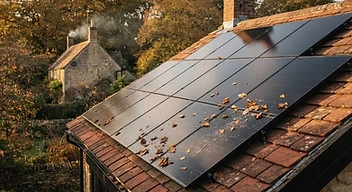
Do Solar Panels Need Cleaning? The UK Solar Owner's Guide for 2026
Rain, dust, pollen and bird droppings all land on your solar array — but does it actually need cleaning? The better question is whether your system is performing as expected, and here's how to tell.

How Much Do Solar Panels Cost in the UK in 2026? The Real Cost vs Savings
An average UK solar PV system costs around £7,600 — but the cheapest quote isn't the cheapest system to own. Real costs, savings, payback periods and how to compare quotes properly.