
Solar Is Getting Cheaper. So Why Is the Grid Becoming the Bigger Challenge?
Solar panel costs have fallen by around 90% since 2010 — but the next energy challenge isn't generating more electricity. It's generating, storing and using it at the right time.

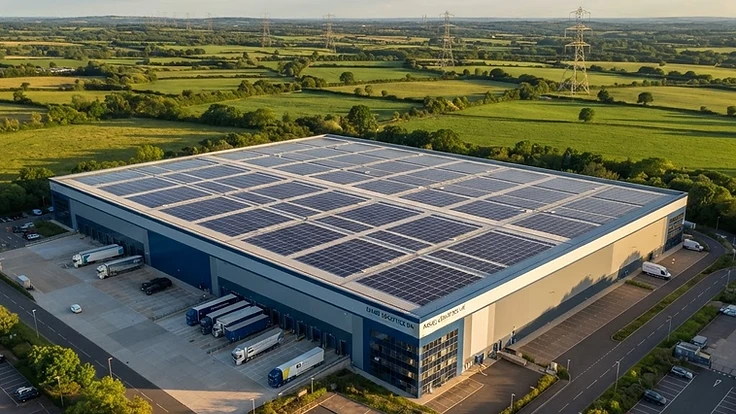
For more than a decade, the biggest barrier to solar energy was simple: it cost too much.
That barrier has been steadily dismantled. Solar systems today cost a fraction of what they did in 2010, and record numbers of UK homes and businesses are installing them as a result. But something else is happening at the same time — something that receives far less attention.
As solar becomes affordable for millions of properties, the energy challenge is quietly shifting. The question is no longer only “Can we generate enough renewable electricity?” It is increasingly: “Can we generate, store, distribute and use electricity at the right time?”
This article explains why — and what it means for homeowners and businesses considering solar and battery storage.
Solar’s Economics Have Changed
The long-term trend in solar costs is one of the most dramatic in modern energy.
According to the International Renewable Energy Agency (IRENA), the global weighted-average cost of electricity from utility-scale solar PV has fallen by roughly 90% since 2010, to around US$0.04 per kilowatt-hour. Total installed costs for utility-scale solar projects commissioned in 2024 were 87% below 2010 levels, and crystalline silicon module costs — the panels themselves — registered a 97% decline between January 2010 and December 2024.
The International Energy Agency reached a similar conclusion in its World Energy Outlook 2020, describing solar projects in favourable locations as capable of offering “the cheapest electricity in history”.
The UK is living this shift. More than 1.7 million homes now generate some of their own electricity with solar panels, and MCS recorded more than 120,000 certified solar installations in the first half of 2025 alone — a 36% increase on the same period the year before.
In other words: the affordability problem is being solved. The next constraint is a different one.
The Problem Isn’t Just Generating Electricity
A rooftop solar system generates most of its electricity in the middle of the day, when the sun is strongest.
The problem is that homes and businesses don’t necessarily consume most of their electricity in the middle of the day. Households typically see demand in the morning and, above all, in the early evening — precisely as solar output fades. Many businesses have flatter profiles, but a warehouse or office operating from early morning until late evening still uses a large share of its electricity outside peak solar hours.
That timing mismatch is the heart of the issue:
When generation and consumption line up, solar directly displaces electricity you would otherwise have to buy. When they don’t, the surplus has to go somewhere — and where it goes determines how much of solar’s value you actually keep.
At a property level, the two available paths look like this:
Why the Electricity Grid Matters
Britain’s electricity system was largely designed in an era of centralised generation: large power stations feeding electricity one way, through transmission and distribution networks, to passive consumers at the end of the line.
Solar, batteries, electric vehicles and heat pumps change that model. Increasing numbers of properties are no longer just consumers — they are small, distributed power stations that generate, store and export electricity. The National Energy System Operator (NESO), which plans and balances Great Britain’s electricity system, has to match supply and demand every second — and millions of small generators make that balancing act far more dynamic.
None of this means solar is “breaking the grid”. The system is adapting — that is what it is designed to do. But integrating growing volumes of distributed, weather-dependent generation at scale can require:
- grid reinforcement and network investment — upgrading cables and substations where local generation exceeds what the network was originally sized for
- flexibility — shifting generation or demand in time rather than building more hardware
- storage — batteries at every scale, from homes to grid sites, absorbing energy when it is abundant and returning it when it is needed
- smart energy management and demand shifting — moving consumption to periods when electricity is cheap and clean
The connections process reflects the same reality. NESO has been reforming how generation and demand projects connect to the network, prioritising ready-to-go projects — a clear sign of how much demand there now is to attach new energy resources to the system.
The £1 of Electricity Question
Here is a simple way to understand why timing matters — in money.
Imagine a business whose rooftop solar array generates 100 kWh of electricity on a bright day, mostly between mid-morning and mid-afternoon. During those same hours the business consumes 60 kWh — lighting, refrigeration, IT and machinery. That leaves a 40 kWh surplus.
Without a battery: the 40 kWh surplus is exported to the grid. Later that evening, when the solar system has stopped producing, the business imports electricity back from the grid to keep operating.
| Example day | Generation | Daytime consumption | Surplus |
|---|---|---|---|
| Without battery | 100 kWh | 60 kWh | 40 kWh exported |
| With suitable battery | 100 kWh | 60 kWh | 40 kWh stored for later use |
With a suitably sized battery: the 40 kWh surplus is stored on site instead, then used later that evening when the building still needs power — reducing or avoiding the electricity imported at that time.
Why does this matter financially? Because imported and exported electricity are usually valued very differently. Under the Smart Export Guarantee, suppliers set their own export rates — and while some now pay well into double figures, many standard export tariffs pay in the region of 3p to 15p per kWh, while typical import rates sit above 20p per kWh.
Expressed in pounds (using round illustrative figures, not actual tariff pricing): exporting 40 kWh at 5p per kWh earns around £2. Buying the same 40 kWh back in the evening at 25p per kWh costs £10. Every unit of surplus you consume yourself is a unit you don’t have to buy at the import rate; every unit you export earns only the export rate. That gap is where storage earns its keep — for homes and for businesses alike.
The actual financial value of storing rather than exporting always depends on several factors, including:
- your import tariff — how much the electricity you are avoiding actually costs
- your export tariff — what the surplus would otherwise earn
- the installed cost of the battery
- battery efficiency — a share of stored energy is always lost in conversion
- battery degradation over its working life
- your building’s energy profile and solar generation pattern
- the tariffs and flexibility schemes actually available to you
A battery is not automatically a saving. It is an investment whose return depends on how well it matches how your building actually uses energy — which is precisely why this should be modelled rather than guessed.
This Is Why Battery Storage Is Becoming More Interesting
As the economics of generation improve, attention naturally moves to what happens after generation. Storage costs are following a similar trajectory to solar’s: IRENA’s analysis shows the total installed cost of utility-scale battery energy storage systems fell by 93% between 2010 and 2024.
In practical terms, a battery gives a household or business a degree of control that solar alone never could:
- Solar self-consumption — a higher share of the electricity your panels produce is used by your own building rather than exported.
- Peak demand management — stored energy can cover an expensive evening peak, or a commercial demand spike, instead of the grid.
- Time-of-use tariffs — on smart tariffs, a battery can be charged with cheap off-peak or midday electricity and discharged when rates are high.
- Backup capability — where the system supports it, a battery can keep critical circuits running during a power cut.
- Energy flexibility — commercial customers can potentially earn revenue from flexibility services by making stored energy available to the system when it is most needed.
If you are weighing storage alongside a solar system, our battery storage page explains the technologies and design questions in more depth.
Whether storage makes sense, however, depends entirely on individual circumstances — your consumption profile, tariffs, budget and objectives. Suitability is a design question, not a default.
For Businesses, Timing Can Matter as Much as Generation
The timing challenge is sharpest in commercial settings, because commercial electricity use follows operating hours — not the sun.
Consider a typical warehouse:
| Energy profile | Timing |
|---|---|
| Peak solar generation | 10:00 – 16:00 |
| Facility operating hours | 06:00 – 22:00 |
The building runs for sixteen hours a day; the sun delivers its strongest output across six of them. That leaves early-morning and late-evening operations powered by imported electricity, even on the sunniest days — unless some of that midday surplus is stored, or consumption is shifted.
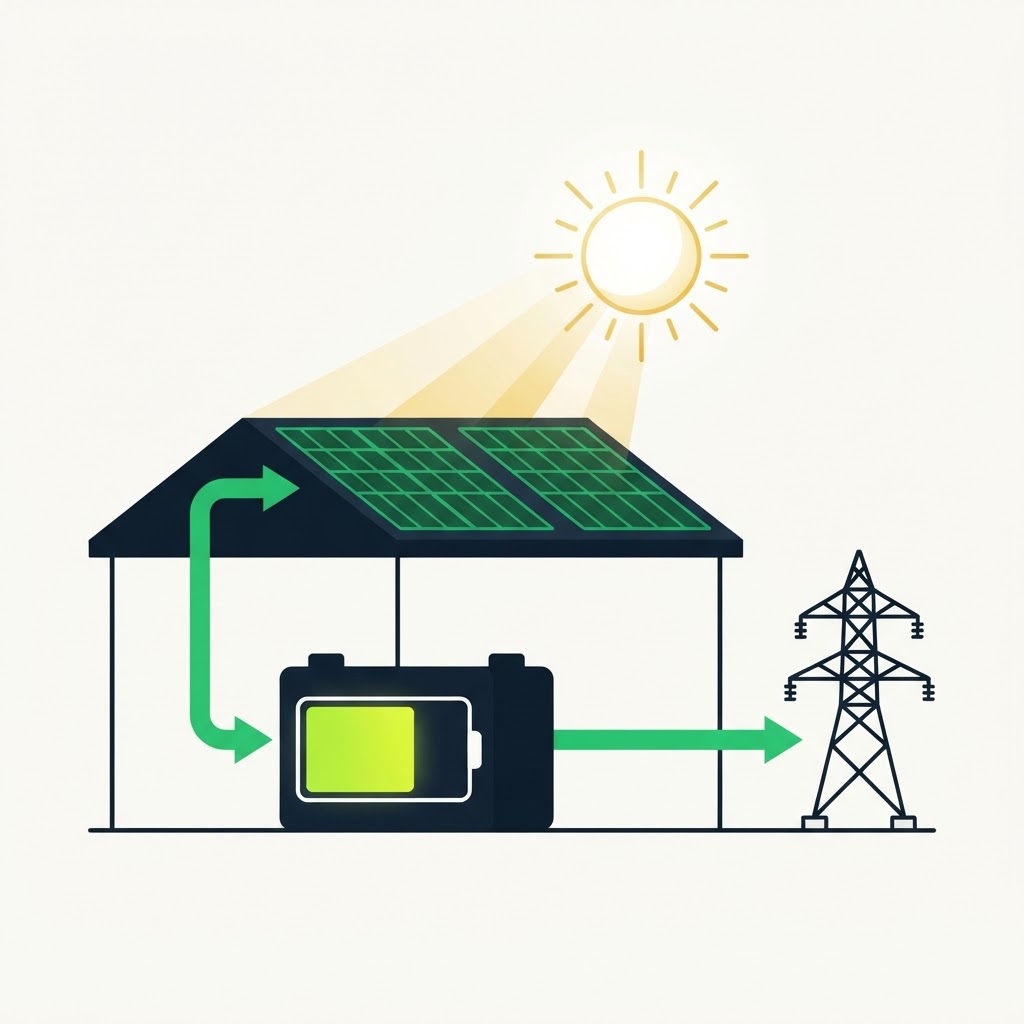
This is why the most useful commercial solar questions are not about panels at all:
- When does our building consume electricity?
- When will the solar system generate electricity?
- How much generation can we consume directly?
- How much could be exported?
- Would battery storage improve self-consumption?
- What battery capacity actually matches the load profile?
It is also why we describe Make Green Energy as an energy solutions business rather than simply a panel installer. The panels are one component. The value is created by designing the whole system — generation, storage and consumption — around how your building actually uses energy.
Our commercial solar page covers how we approach larger installations.
More Solar Panels Isn’t Always the Whole Answer
It is tempting to size a solar project by one number: the usable roof. But a system designed only around roof area is designed around the wrong constraint. A properly designed solar and storage system takes into account:
- roof area, orientation and shading
- half-hourly consumption data, where available
- current electricity demand and operating hours
- future demand — EV charging, new equipment, expansion
- battery capacity and control strategy
- grid connection capacity and any export limitations
- the financial objectives of the project
Sometimes the right answer is more panels. Sometimes it is the same panels plus storage — or fewer panels and a larger battery. You can see how these systems work together on real projects in our completed installations, or read more about battery storage options and commercial solar design.
The Future Is About Energy Control
Step back, and the bigger picture comes into view.
The first phase of the solar revolution was about making renewable generation affordable. That phase has, to a large extent, succeeded. The next phase may increasingly be about making that generation intelligent.
Generate electricity. Store it when appropriate. Use it when it creates the greatest value. Export it when appropriate. Manage the whole system around the customer’s actual energy profile.
Homes and businesses that treat energy as a system — generation, storage, tariffs and consumption working together — stand to gain more from every panel they install than those who treat solar as a one-off purchase. And as more properties generate their own power, it will be the businesses that genuinely understand their own energy profile that benefit from it most.
What Should a Business Do Before Installing Solar?
Whether you work with Make Green Energy or another installer, the same preparation will make your project better. Before any system is recommended, a proper assessment should establish:
- historical electricity consumption
- half-hourly data, where available
- roof condition
- roof orientation
- shading across the day and year
- available roof area
- grid connection capacity
- operating hours
- day versus night electricity demand
- future EV or equipment demand
- battery suitability and sizing
- export considerations and constraints
That assessment — not a catalogue of panels — is where a good solar project starts. It is how we work at Make Green Energy: understand the building first, then design the energy system around it.
The Real Question: Control
Solar has won the cost argument. The systems around it — storage, timing and the grid — are where the next decade of energy decisions will be made.
Which leaves a question worth sitting with: if your business generates its own electricity but cannot control when that electricity is used, how much energy independence does it really have?
That is the question a commercial solar assessment is designed to answer.
Planning commercial solar?
Make Green Energy can assess your roof, electricity consumption, generation potential and battery-storage requirements before a system is designed.
Request a Commercial Solar AssessmentRelated Insights
This article opens our series on solar, storage and the energy system. Coming next:
- Commercial Battery Storage: When Does It Make Sense?
- How Much Electricity Can a Commercial Solar System Generate?
- Why Half-Hourly Electricity Data Matters Before Installing Solar
- Exporting Solar vs Storing It: What Businesses Should Understand
- How We Assess a Commercial Roof Before Installing Solar
Explore our latest insights as the series grows, or read more about commercial solar and battery storage.
About Make Green Energy
Make Green Energy helps UK homeowners and businesses understand and access practical renewable-energy solutions, including solar PV, battery storage and energy-saving technologies. Our engineers design, install and support systems built around your property and long-term energy goals.
References & Further Reading
- →IRENA — Renewable Power Generation Costs in 2024
- →IEA — World Energy Outlook 2020
- →Ofgem — Smart Export Guarantee (SEG)
- →Solar Energy UK — Smart Export Guarantee tariff league table
- →MCS — Record number of renewables being installed into UK homes
- →NESO — National Energy System Operator
- →GOV.UK — Smart Export Guarantee guidance
- →Make Green Energy — Commercial Solar
- →Make Green Energy — Battery Storage
- →Make Green Energy — Solar Projects
Frequently Asked Questions
Ready to explore solar for your property?
Whether you're considering solar panels, battery storage or a more complete renewable-energy solution, Make Green Energy can help you understand your options.
Related articles

Do Solar Panels Need Cleaning? The UK Solar Owner's Guide for 2026
Rain, dust, pollen and bird droppings all land on your solar array — but does it actually need cleaning? The better question is whether your system is performing as expected, and here's how to tell.

Solar Panels UK in 2026: Cost, Batteries, Cleaning & What Homeowners Should Know Before Installing
How much do solar panels cost in the UK in 2026? Do you need a battery — and do panels work when it's cloudy? An installer's guide to costs, payback, cleaning and the questions to ask before you buy.

How Much Do Solar Panels Cost in the UK in 2026? The Real Cost vs Savings
An average UK solar PV system costs around £7,600 — but the cheapest quote isn't the cheapest system to own. Real costs, savings, payback periods and how to compare quotes properly.