
How Much Do Solar Panels Cost in the UK in 2026? The Real Cost vs Savings
An average UK solar PV system costs around £7,600 — but the cheapest quote isn't the cheapest system to own. Real costs, savings, payback periods and how to compare quotes properly.

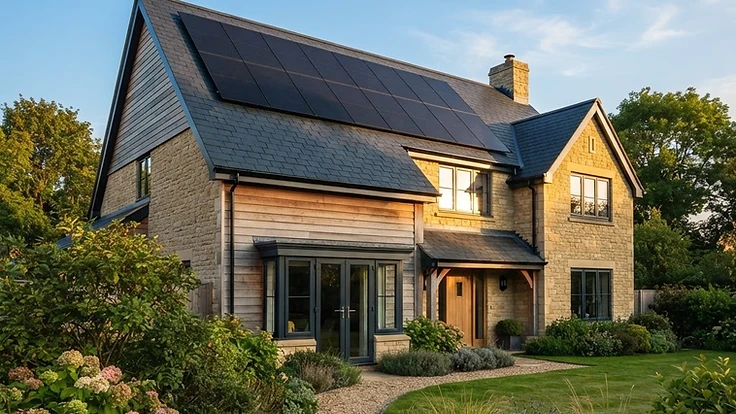
Updated September 2026 | Make Green Energy
"How much do solar panels cost?"
It sounds like a simple question. It isn't.
Because the cheapest solar quotation isn't necessarily the cheapest solar system to own. And the most expensive system isn't automatically the best.
If you're considering solar panels in 2026, there are really three numbers you need to understand:
What will the system cost? How much electricity could it generate? How much of that electricity could actually benefit you?
Let's break it down.
How Much Do Solar Panels Cost in the UK?
According to the Energy Saving Trust, an average domestic solar PV system is currently around £7,600.
But treat that as a benchmark — not a quotation. Your actual solar installation price can change considerably depending on your property and the system being installed. Factors include:
- number of solar panels
- panel specification
- inverter
- battery storage
- scaffolding requirements
- roof type and roof accessibility
- electrical work and system complexity
- EV charger integration
Two houses on the same street could therefore receive very different solar designs — and potentially very different quotations.
Stop Asking "How Much Are Solar Panels?"
Ask this instead: "what am I getting for my money?"
Imagine two quotations. Quote A: £6,500. Quote B: £8,000.
At first glance, Quote A wins. It's £1,500 cheaper. But what if Quote B provides a better-designed system that generates more usable electricity for the property over its lifetime? Or includes different equipment, warranties or aftercare? Now the comparison becomes more complicated.
When comparing solar quotations, look beyond the number at the bottom. Compare:
- system size
- expected annual generation
- panel specification
- inverter
- battery capacity, if included
- product warranties and installation warranties
- monitoring and aftercare
- expected self-consumption
- expected export
The cheapest quotation and the best-value quotation aren't necessarily the same thing.
How Much Could Solar Panels Save You?
This is where solar becomes more interesting.
When your panels generate electricity that your property uses directly, that's electricity you don't need to purchase from the grid at that moment. Your potential savings therefore depend heavily on how much electricity your panels generate and how much of that electricity you actually use.
Consider this example. Your solar panels are generating strongly at 1pm, but nobody is home. Electricity consumption is extremely low. A large amount of generation may therefore be available for battery storage or export.
Now consider another household. Someone works from home. The washing machine is running. Computers are operating. Appliances are being used. An EV may be charging. That property could consume much more solar electricity directly.
Same sunshine. Same size solar system. Different financial outcome.
That's why your electricity consumption matters almost as much as your roof.
How Long Do Solar Panels Take to Pay for Themselves?
There's no universal solar payback period. Energy Saving Trust modelling published in 2026 provides examples of approximately:
| Location (EST example) | Indicative payback period |
|---|---|
| London | around 9 years |
| Manchester | around 10–11 years |
| Aberystwyth | around 9–10 years |
| Stirling | around 11–12 years |
These examples include assumptions about electricity savings and export payments. Your actual result can be different.
Solar payback can be affected by installation price, location, roof orientation, shading, system size, electricity prices, household consumption, export tariff, battery storage and equipment performance.
That's why we'd be cautious about any solar advertisement promising that every homeowner will achieve exactly the same saving. Your property needs its own calculation.
Can Solar Panels Really Reduce Your Electricity Bill?
Yes — but solar doesn't simply make an electricity bill disappear. Here's what actually happens.
During daylight hours, your solar panels generate electricity. If your home needs electricity at that moment, solar can help supply that demand. That means less electricity needs to be purchased from your energy supplier during those periods. But your property will still need electricity when solar generation is insufficient.
This is one reason battery storage has become increasingly relevant. A battery can potentially store some surplus solar electricity for later use. But that doesn't mean every home automatically needs one.
Is a Solar Battery Worth the Extra Cost?
This depends on how your household uses electricity.
Suppose your panels generate surplus electricity during the afternoon. Without battery storage, eligible surplus generation may be exported. With an appropriately designed battery system, some of that electricity could potentially be stored and used later.
But there's a catch: a bigger battery isn't automatically a better investment. If you buy far more storage capacity than your property can regularly use, you've paid for capacity that may spend substantial periods underutilised.
Battery sizing should therefore consider daily and evening electricity usage, solar array size, expected surplus generation, tariffs, future EV charging, heat pumps and future household demand.
At Make Green Energy, we'd rather calculate the battery around the property than simply recommend the biggest battery available. See our dedicated guide: Solar Panel Battery Storage UK: Is a Solar Battery Worth It in 2026?
What About Selling Electricity Back to the Grid?
Solar electricity you don't consume or store may potentially be exported. Eligible households can receive payments through a Smart Export Guarantee (SEG) tariff. Different energy suppliers can offer different export rates and terms.
This creates three possible destinations for the electricity your panels generate:
Understanding the balance between those three can be more useful than simply asking "how many panels can you fit on my roof?"
Are Solar Panels Still 0% VAT in the UK?
Qualifying installations of certain energy-saving materials, including solar panels, currently benefit from a 0% VAT rate under the applicable UK rules. That can include certain associated technologies when the relevant conditions are met.
However, tax rules and eligibility can change, so current requirements should always be checked when you're ready to proceed.
What About Solar Finance?
This is where another important comparison appears.
Some homeowners don't want to pay the entire installation cost upfront. Solar finance can spread the cost over time. But don't compare finance based purely on the monthly payment. Ask:
- What is the APR?
- What is the total amount repayable?
- How long is the agreement?
- Can I make additional payments?
- What happens if I sell the property?
- Are there early repayment conditions?
Then compare the cost of finance against the expected benefits of the solar system. A £99 monthly payment isn't automatically a bargain simply because £99 sounds affordable. Understand the total cost. See our solar finance options for more detail.
Can I Get Free Solar Panels?
Be careful with the word "free."
There are sometimes government-backed schemes or eligibility-based programmes designed to improve home energy efficiency. But eligibility depends on the specific scheme and household circumstances. Not every homeowner qualifies.
And a legitimate installer should explain exactly who funds the installation, who owns the equipment, whether repayment is required, what eligibility conditions apply and whether there are obligations attached.
If an advert says simply "FREE SOLAR FOR EVERYONE" — read the small print before handing over your details.
What Size Solar System Do I Need?
This shouldn't begin with the number of bedrooms in your house. It should begin with your electricity consumption and your property.
An installer should consider annual electricity consumption, roof dimensions, orientation and shading, available roof space, panel output, expected annual generation, daytime electricity consumption and future electricity demand.
For example, someone planning to purchase an EV may have very different future electricity requirements. Likewise, a household considering a heat pump may need its future consumption incorporated into the solar design.
Design for where your energy consumption is going — not only where it is today.
South-Facing Roof? Great. But Don't Assume Other Roofs Can't Work
South-facing roofs can be highly attractive for solar generation in the UK. However, east- and west-facing roofs can also be suitable. Sometimes an east/west configuration can produce electricity across a broader part of the day.
Roof suitability depends on more than compass direction. Shading matters. Pitch matters. Available area matters. Your consumption profile matters. That's why a proper solar assessment should look at the actual property.
Solar Panels on Flat Roofs
Yes — solar panels can potentially be installed on suitable flat roofs. Panels may be mounted using systems designed to provide an appropriate angle while accounting for factors including wind loading, shading between panel rows, roof structure, drainage, maintenance access and available area.
Flat commercial roofs can also provide significant opportunities for larger solar PV systems where structural and electrical conditions allow.
Solar Panels for Businesses: The Calculation Changes
For businesses, the solar conversation can become particularly interesting. Why? Because many commercial properties — warehouses, manufacturing facilities, offices, retail units, schools, care facilities and distribution centres — consume substantial electricity during daylight hours, exactly when solar PV is generating.
A business might have machinery, refrigeration, lighting, computers, air conditioning and EV charging operating throughout the day. This can create opportunities to consume generated solar electricity directly on site.
But commercial solar design should be based on data. Make Green Energy can analyse annual consumption, half-hourly electricity data, roof area and condition, electrical infrastructure, daytime baseload, peak demand, potential solar generation, export potential and battery requirements.
The question isn't simply "how many panels fit on the warehouse?" It's: "how much electricity can this site economically use?"
7 Questions to Ask Before Accepting a Solar Quote
Before signing anything, ask:
- What is the expected annual generation? You should understand what the proposed system is expected to produce.
- How was the system size calculated? There should be reasoning behind the design.
- What equipment is being installed? Know your panels, inverter and battery.
- What warranties are included? Separate manufacturer warranties from installation warranties.
- How much electricity am I expected to use directly? Self-consumption can materially affect the economics.
- How much could I export? Understand what happens to surplus generation.
- What happens after installation? Know who you contact if the system stops performing as expected.
The Cheapest Solar System Could Become the Expensive One
Solar PV is a long-term purchase. Saving £500 today isn't necessarily a saving if you've compromised system design, equipment quality or support for something expected to operate for decades.
At the same time, paying more doesn't automatically guarantee quality.
That's why Make Green Energy believes the decision should be based on design, data, equipment, installation, warranty, aftercare and price. Not price alone.
Find Out What Solar Could Cost for Your Property
You can spend hours searching "solar panel cost UK", "how much are solar panels?", "solar panels with battery price", "are solar panels worth it?" — but Google doesn't know your roof. It doesn't know your electricity consumption. It doesn't know when you use electricity. It doesn't know whether you're planning an EV. And it doesn't know how much of your solar electricity you could actually use.
We can calculate around those factors.
Make Green Energy can assess your roof suitability, electricity consumption, solar system size, expected generation, battery storage, EV charging, potential electricity savings, export opportunities and installation options — then provide an appropriate solar solution based around your requirements.
Get Your Free Solar Assessment
Don't guess what solar could save you — let's calculate it around your actual property.
- Whether your property is suitable for solar
- What size system may be appropriate
- Whether battery storage makes sense
- Potential electricity generation
- Potential savings and export opportunities
- Available installation options
Related Insights
This article is part of our series helping UK households get more from solar:
- Solar Panel Battery Storage UK: Is a Solar Battery Worth It in 2026? — sizing, grid charging and EVs
- Solar Panels UK in 2026: Cost, Batteries, Cleaning & What Homeowners Should Know — the complete 2026 guide
- Solar Is Getting Cheaper. So Why Is the Grid Becoming the Bigger Challenge? — costs vs grid strategy
- Moving Into a Home With Solar Panels? Here's What You Need to Know — inherited systems
Explore our latest insights, or read more about domestic solar, battery storage and commercial solar.
About Make Green Energy
Make Green Energy helps UK homeowners and businesses understand and access practical renewable-energy solutions, including solar PV, battery storage and energy-saving technologies. Our engineers design, install and support systems built around your property and long-term energy goals.
References & Further Reading
Frequently Asked Questions
Ready to explore solar for your property?
Whether you're considering solar panels, battery storage or a more complete renewable-energy solution, Make Green Energy can help you understand your options.
Related articles

Do Solar Panels Need Cleaning? The UK Solar Owner's Guide for 2026
Rain, dust, pollen and bird droppings all land on your solar array — but does it actually need cleaning? The better question is whether your system is performing as expected, and here's how to tell.

Solar Panels UK in 2026: Cost, Batteries, Cleaning & What Homeowners Should Know Before Installing
How much do solar panels cost in the UK in 2026? Do you need a battery — and do panels work when it's cloudy? An installer's guide to costs, payback, cleaning and the questions to ask before you buy.

Solar Panel Battery Storage UK: Is a Solar Battery Worth It in 2026?
Is a solar battery worth it in the UK? A battery's value depends on when you use electricity. Here's how sizing, grid charging, EVs and export tariffs decide the answer for your property.