
Solar finance options in the UK in 2026
Understand the differences between solar loans, leasing, subscriptions and business funding, with provider comparisons and practical checks before you commit.
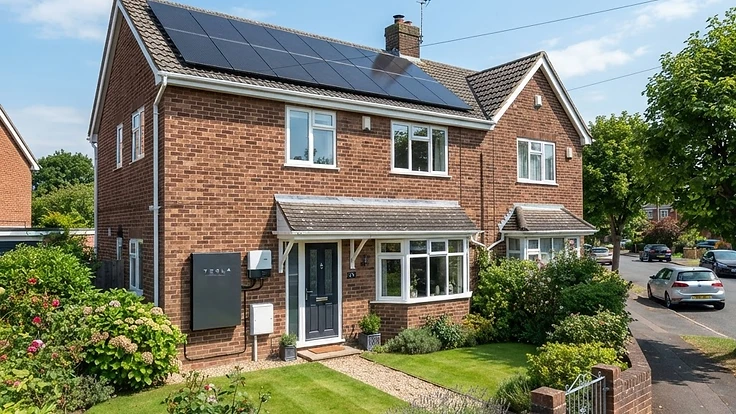
Loans, leasing, subscriptions and commercial funding explained. Researched on 13 October 2026 for Make Green Energy.
Solar panels can reduce the electricity you buy from the grid. Paying for the installation, however, is a separate decision. A manageable monthly payment can make a project possible, but it does not automatically make the overall deal good value.
UK solar finance options include personal and installer-arranged loans, solar payment plans, mortgage borrowing and commercial power purchase agreements. Some arrangements give you ownership immediately; others fund access to equipment or electricity. Grants may also help eligible households, although they are separate from finance and depend on location and circumstances.
This guide explains how the main routes work, compares providers including Hometree Finance, Sunsave, Octopus Energy and Nationwide, and sets out what to check before committing. It is a selected market overview, not a whole-market comparison or a personalised financial recommendation. Providers listed here are not all available through Make Green Energy.
Solar finance options at a glance
| Route | What you pay for | Ownership and main consideration |
|---|---|---|
| Cash purchase | Equipment and installation upfront | You own the system; allow for future maintenance. |
| Personal or installer-arranged loan | Repayment of borrowed money, usually with interest | Normally funds a purchase; compare APR, fees and total repayment. |
| Solar lease or managed payment plan | Use of equipment and any contracted services | Ownership and end-of-term rights depend on the agreement. |
| Loan-backed subscription | A financed purchase with ongoing services | May include ownership immediately; separate credit costs from service charges. |
| Green mortgage borrowing | Additional borrowing secured on your home | Compare the full mortgage term and the rate after any introductory period. |
| Business asset finance | Equipment payments under a business agreement | Hire purchase and leasing have different ownership outcomes. |
| Commercial PPA | Electricity supplied by a third-party-owned solar system | Check the electricity price, contract length and property commitments. |
Solar loans and leasing explained
Buying solar panels with a loan
A solar loan lets you spread the cost of buying an installation. You may arrange borrowing yourself or be introduced to a lender through an installer. The installer, credit broker and lender can be different businesses, so establish who is responsible for each part of the transaction.
Compare quotations for the same equipment and installation scope. A lower repayment can reflect a longer term, a larger deposit or a different system. Ask for the cash price, amount borrowed, APR, fees, total amount repayable and early-settlement terms together.
Keep warranties separate from finance. Repaying a system over many years does not, by itself, mean repairs will be covered for that entire period.
Leasing solar panels
With a lease, payments generally cover the use of equipment owned by another party. Do not assume that making the final payment automatically transfers ownership. Ask whether the contract includes a purchase option, further rental, removal or another end-of-term arrangement.
Also distinguish an equipment agreement from a lease over roof space. If property rights are involved, clarify mortgage-lender consent, access, roof repairs and the process for selling the property before signing.
Solar subscriptions
“Subscription” describes how a service is marketed, rather than one universal finance structure. It may combine a loan with monitoring and maintenance. Read the credit agreement and service terms to establish ownership, total cost and which obligations continue if you move or repay early.
Hometree Finance Solar Plan
Hometree Finance’s Solar Plan combines installation funding with monitoring and repair support. Its product page describes terms of five to 25 years, zero-deposit options and replacement protection for covered equipment that cannot be repaired. The page says payments increase by 2.5% annually, so the starting payment should not be treated as a fixed lifetime cost.
Hometree’s eligibility information describes homeowners installing solar, with optional batteries, in owner-occupied or privately rented properties in England and Wales. Confirm eligibility for your ownership structure rather than assuming a domestic offer covers commercial premises.
Its end-of-term explanation says monitoring and maintenance stop, no further payments are due and equipment is only removed if requested. Obtain the agreement’s precise ownership provisions before signing. The product page also explains that early exit requires payment of a settlement amount: cancellation does not mean walking away without a balance to pay.
The practical comparison is between the total scheduled payments and the value of both the installation and the included support. Ask for the complete payment schedule, exclusions and moving-home terms.
Other solar finance providers to compare
Sunsave Solar and Battery Plus
Sunsave’s Solar and Battery Plus is a financed ownership package: its current page says customers own the system from day one and monthly payments remain fixed. Its 20-year option includes a monitoring and maintenance guarantee.
That service has conditions. The page specifies a £120 engineer callout charge, capped at two visits a year, alongside its repair cover. It also separates loan repayments from a monitoring and maintenance fee in its finance illustration. Compare the complete package cost, rather than only the underlying interest rate.
For a home sale, Sunsave describes repayment from sale proceeds or, on the 20-year term, a contract transfer subject to the buyer passing eligibility checks. A transfer should therefore never be assumed to happen automatically.
Octopus Energy and Zopa Bank
Octopus Energy’s solar finance information describes installer-arranged finance through Zopa Bank, with three-, five-, seven- and ten-year options. This is a route for financing an Octopus installation, not evidence that the same arrangement is available with every installer.
Request the current personalised illustration, including any deposit and the total repayment. Compare the installation specification and aftercare with competing quotes; financing terms alone do not tell you whether two solar packages are equivalent.
Nationwide Green Additional Borrowing
Eligible existing mortgage customers can consider Nationwide Green Additional Borrowing. At the research date, Nationwide described borrowing of £5,000 to £20,000, with 0% interest for an initial two- or five-year fixed period, subject to criteria. Solar panels and storage are eligible improvements.
The introductory period is not necessarily the full repayment term. Nationwide says any remaining balance moves to its Standard Mortgage Rate when the fixed deal ends, unless another eligible arrangement is made. The borrowing must be used for eligible improvements and cannot reimburse completed work.
This is secured borrowing. Your home may be repossessed if you do not keep up repayments on your mortgage. Compare affordability over the whole term, including what happens after the initial rate expires.
How to compare these providers fairly
| Provider or route | Distinguishing feature | Question to ask |
|---|---|---|
| Hometree Solar Plan | Funding bundled with ongoing system support | What will every year cost after annual increases? |
| Sunsave | Financed ownership with a service package | What do service fees, callouts and exclusions add? |
| Octopus with Zopa | Credit arranged for an Octopus installation | What is the full installed specification and repayment cost? |
| Nationwide | Mortgage-linked borrowing for eligible customers | What rate and balance apply after the initial deal? |
| Independently arranged borrowing | Potential flexibility over installer choice | Does the lender permit the purpose, and what aftercare is separate? |
These are different products, not a ranking of the cheapest suppliers. A personalised quote is needed for a meaningful comparison.
Commercial solar finance and power purchase agreements
A business may want solar while preserving cash for stock, staffing or premises. Start by deciding whether you want to own the equipment or buy the electricity it generates.
EvoEnergy’s commercial funding guide sets out cash purchase, PPAs, lease-to-own and green loans. Its PPA model involves third-party ownership and funding, with the business purchasing electricity over a long-term agreement; its published guide describes 15–25-year arrangements. Lease-to-own instead provides a pathway to ownership under the contract.
For business asset funding, Close Brothers Asset Finance advertises hire purchase, leasing and refinancing, and its energy sector page identifies renewable-energy finance activity. Project suitability, minimum size, security and lending terms require a direct assessment; this is not a confirmed offer for every rooftop installation.
For a PPA proposal, ask who owns the installation, who receives export revenue, how electricity charges change and what happens when you leave the premises. Obtain clear terms covering roof access, maintenance, insurance, system removal and any minimum purchase commitment.
A site using substantial electricity during daylight hours may have a different business case from one operating mainly at night. Use actual consumption data and a site-specific generation forecast. Do not assume every unit generated replaces electricity you would otherwise have bought at the retail price.
For an initial installation discussion, explore commercial solar with Make Green Energy. Confirm which funding routes are available for your particular project.
Solar grants and government support
Warm Homes Local Grant in England
The Warm Homes Local Grant can fund agreed improvements, including solar panels, for eligible privately owned homes in England. The government application page specifies EPC ratings D to G and a usual household income threshold of £36,000 or less, with alternative eligibility through certain benefits or postcode areas.
Local funding and a home assessment determine what is offered. Eligibility does not guarantee solar panels specifically. Check before committing to private borrowing; the council arranges approved work, and landlords may need to contribute.
New government loan proposals
The government’s Warm Homes Plan includes plans for low- or no-interest consumer lending for home upgrades. The official material reviewed for this article did not establish a live, universal solar-loan application route. Treat announcements separately from a confirmed product with published eligibility, terms and an application process.
Scotland Wales and Northern Ireland
Support varies across the UK. The current Home Energy Scotland funding page distinguishes solar thermal and hybrid solar PV-T from conventional solar PV. Do not assume an old reference to interest-free solar funding still covers an ordinary panel-and-battery installation.
For Wales and Northern Ireland, use the relevant national support links on the government home-upgrade application page. An England-only scheme or a lender serving England and Wales is not automatically available throughout the UK.
VAT relief and export payments
HMRC’s energy-saving materials guidance provides for temporary zero-rating of qualifying installations in residential accommodation until 31 March 2027, followed by a scheduled 5% reduced rate. Qualifying battery installations can also fall within the relief. This is installation tax treatment, not a promise of zero tax on every lease payment, service or commercial project. Ask for the VAT basis of your quotation.
The Smart Export Guarantee supports payments for eligible electricity exported to the grid in Great Britain. It is not an installation grant. Confirm eligibility, metering, the tariff and who is entitled to receive the income under your agreement.
How to tell whether solar finance is worth it
There are two calculations: whether the repayments fit your budget, and whether the system produces worthwhile value over time. A project can pass one test and fail the other.
For a first-year cash-flow comparison, use:
Avoided electricity purchases + export income − finance payments − separate running costs = estimated annual net cash benefit.
For example, suppose a household estimates £900 in avoided purchases and £200 in export income. If annual finance payments are £1,200 and separate costs are £100, the result is minus £200 for that year. These invented figures explain the calculation; they are not a typical outcome or a forecast for your property. Any deposit is an additional cash outflow.
Count a unit of electricity once: either it is used to avoid a purchase or exported for payment. With battery storage, include charging costs, conversion losses and any tariff assumptions. Monthly averages also hide seasonal differences: repayments continue through winter when solar output is lower.
Compare the whole payment schedule
A simple fixed-payment illustration of £100 a month for ten years totals £12,000. At £75 for 20 years, the total is £18,000. Neither is a provider quote; deposits and other charges are excluded. The example shows why a lower monthly amount can cost more overall.
For an increasing-payment plan, use each year's actual scheduled amount. Do not multiply the first payment by the number of months and call that the lifetime cost. For mortgage borrowing, model the remaining balance after an introductory rate ends.
Then test the energy forecast against lower export rates, lower generation, changing usage and repair costs not covered by the contract. Guaranteed finance payments should not be compared with an optimistic savings estimate presented as certain.
Questions to ask before signing
- What is the cash price for this exact installation?
- Who is the lender, broker, installer and maintenance provider?
- Who owns the panels, inverter and battery, now and at the end?
- What are the deposit, APR where applicable, fees and total scheduled payments?
- Are payments fixed, variable or increased annually?
- Which repairs, callouts, scaffolding and replacements are included or excluded?
- Who receives export payments and any battery-related income?
- What happens if I sell, remortgage or need roof repairs?
- What must I pay to settle or end the agreement early?
- How does the proposal perform under more cautious savings assumptions?
Use the FCA’s guidance on misleading financial promotions as a reminder to question unclear claims. Regulatory status is not a guarantee that a particular deal is suitable for you.
Frequently asked questions
Can I get solar panels with no upfront cost?
Some providers offer this, subject to eligibility and the agreement. It means the initial cost is funded; payments or other contractual commitments remain. Check the total cost and ownership terms.
Is solar leasing better than buying?
It depends on the contract and your priorities. Compare ownership, lifetime payments, included maintenance, moving-home provisions and the cost of ending the agreement. A low starting payment alone cannot answer the question.
Is interest-free solar finance available in the UK?
Some eligible borrowers can access introductory interest-free arrangements, including the Nationwide product described above. Availability is conditional. Check whether the interest-free period covers the full borrowing term and what happens afterwards.
Can I finance a solar battery as well as panels?
Some packages include batteries, while other providers finance separate battery installations. Confirm the eligible equipment, term and installation scope with the provider. Include battery operating costs and any replacement cover in the comparison.
Will solar savings cover the repayments?
Not necessarily. The answer depends on system output, your electricity use, tariffs and finance costs. Obtain an individual forecast and compare it with the entire payment schedule, including winter affordability.
What happens if I move home?
You may need to settle borrowing, obtain approval for a transfer or follow property-related contract provisions. The answer differs between products. Request the moving-home terms before signing, rather than relying on a verbal assurance.
Can businesses install solar through a PPA?
Yes, suitable projects can use a power purchase agreement. A third party funds and owns the installation while the business buys electricity under agreed terms. Site suitability, property rights and the financial proposal determine availability.
Explore solar for your property in Bedfordshire
Before choosing how to pay, establish what your property needs. A useful quotation should explain system size, predicted generation, battery capacity where relevant and the assumptions behind estimated savings.
If you are considering solar in Luton, Dunstable, Bedford or the surrounding area, explore Make Green Energy’s domestic solar installations and solar finance information.
Request a solar quotation from Make Green Energy. Share your postcode, property type and recent electricity usage to start a discussion about the installation and the payment routes currently available for your project.
Information checked on 13 October 2026. Products, eligibility, rates and government schemes can change. This article provides general information, not personalised financial, mortgage or tax advice. Finance is subject to status and provider terms; estimated energy savings are not guaranteed. External providers are included for comparison and their inclusion does not imply a partnership with Make Green Energy.
See Your Monthly Finance Options
Already have a quote? Enter a few details to see indicative monthly payments, plan terms and your lifetime payment and savings projection — step by step.
About Make Green Energy
Make Green Energy helps UK homeowners and businesses understand and access practical renewable-energy solutions, including solar PV, battery storage and energy-saving technologies. Our engineers design, install and support systems built around your property and long-term energy goals.
Ready to explore solar for your property?
Whether you're considering solar panels, battery storage or a more complete renewable-energy solution, Make Green Energy can help you understand your options.
Related articles

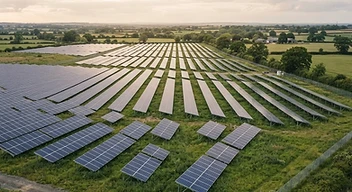
Britain needs more solar. Where we put it matters.
Two BBC stories — a 1,200-hectare solar farm in Northamptonshire and 62,000 panels on a former Bedfordshire landfill — show why siting should shape Britain's next wave of solar.

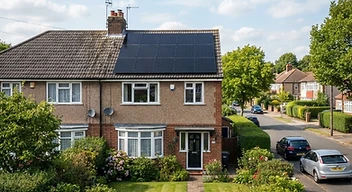
How Does Solar Power Work? A Guide for Luton, Dunstable and Stevenage
A plain-English guide to how solar panels, inverters and batteries work — and what that means for homes and businesses in Luton, Dunstable and Stevenage.

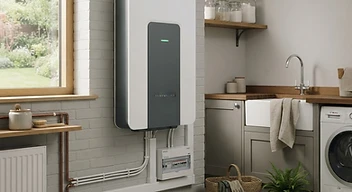
Solar Panel Battery Storage UK: Is a Solar Battery Worth It in 2026?
Is a solar battery worth it in the UK? A battery's value depends on when you use electricity. Here's how sizing, grid charging, EVs and export tariffs decide the answer for your property.