
Britain's Rooftop Solar Boom: Is Your Business Missing an Opportunity?
More than 270,000 MCS-certified solar installations were completed in 2026. Here's how business owners can judge whether their own roof could cut running costs.
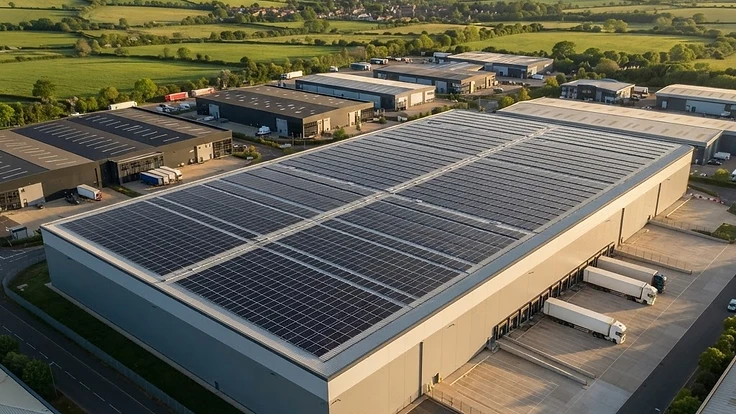
Every month, businesses pay to keep their lights on, equipment running and premises comfortable. Yet the roof above those same operations could be helping supply the electricity they use.
That opportunity is attracting growing attention.
On 20 November, the UK government reported that more than 270,000 MCS-certified solar installations had been completed in 2026, breaking the previous annual record with more than a month remaining. The figures cover certified installations up to 50kW, rather than the entire solar market.
For business owners, the question is becoming increasingly practical: could generating electricity on site help reduce running costs?
Solar is becoming part of everyday business infrastructure
The latest government update highlights solar projects across supermarkets, factories, sports grounds and community facilities.
One example is particularly close to home. Redbourn Leisure Centre in Hertfordshire has installed solar panels and battery storage, with projected electricity cost savings of 61%, equivalent to more than £19,000 annually. Those are expectations for that particular project, rather than a benchmark every building can achieve.
For businesses across Luton, Bedfordshire and neighbouring counties, these developments offer a reason to assess their own premises.
A roof already shelters your business. With the right conditions, it can also become a productive asset.
Your electricity usage matters as much as your roof
A large roof is a useful starting point. Understanding what happens beneath it is equally important.
Consider a business running machinery, refrigeration, computers or ventilation during daylight hours. Some of that demand may coincide with solar generation, creating opportunities to use the electricity directly.
The assessment should begin with your bills and operating patterns:
- How much electricity do you use each year?
- When does your business use the most power?
- Does demand continue through weekends?
- Are you planning electric vehicles or additional equipment?
- How long do you expect to occupy the premises?
These answers help determine an appropriate system size and whether battery storage deserves consideration.
The aim should be to design around your business's demand. Filling every available section of roof is not automatically the best commercial decision.
Would a battery improve the result?
Battery storage can hold some surplus solar generation for use later. That may be useful for premises with demand extending into the evening.
However, storage adds cost, and its value depends on how it will operate.
A business that already consumes most of its solar electricity during the day may have a different case for storage from one that closes early but runs equipment overnight.
Ask for a comparison showing the expected performance of solar alone and solar with a battery. That makes it easier to understand what the additional investment is expected to deliver.
Look beyond the headline savings
Before moving forward, a proposal should explain its assumptions clearly.
Expected generation, on-site consumption, electricity prices, export income and maintenance costs all influence the financial picture. Roof condition, shading, structural suitability and grid connection requirements also need consideration.
If you lease your premises, landlord consent and the remaining lease term should be discussed early.
Be cautious about applying another company's payback period to your own building. Two businesses on the same industrial estate can have very different electricity needs and installation costs.
A useful proposal makes those differences visible.
Start with your own numbers
The growth in rooftop solar is a timely prompt to review an expense your business already carries.
You do not need to decide on panels, batteries or system size before starting that conversation. Begin with your electricity bills, your operating hours and your plans for the premises.
At Make Green Energy, we believe business owners should understand how a proposed solar installation fits their operations, what it could save and which assumptions support those estimates.
Considering solar for your business in Luton, Bedfordshire or the surrounding area? Contact Make Green Energy to discuss your premises and request an assessment based on your electricity usage.
About Make Green Energy
Make Green Energy helps UK homeowners and businesses understand and access practical renewable-energy solutions, including solar PV, battery storage and energy-saving technologies. Our engineers design, install and support systems built around your property and long-term energy goals.
References & Further Reading
Frequently Asked Questions
Ready to explore solar for your property?
Whether you're considering solar panels, battery storage or a more complete renewable-energy solution, Make Green Energy can help you understand your options.
Related articles

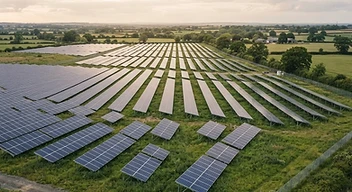
Britain needs more solar. Where we put it matters.
Two BBC stories — a 1,200-hectare solar farm in Northamptonshire and 62,000 panels on a former Bedfordshire landfill — show why siting should shape Britain's next wave of solar.

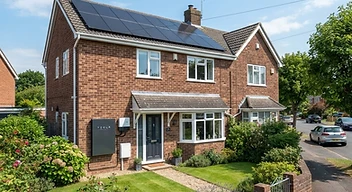
Solar finance options in the UK in 2026
Understand the differences between solar loans, leasing, subscriptions and business funding, with provider comparisons and practical checks before you commit.

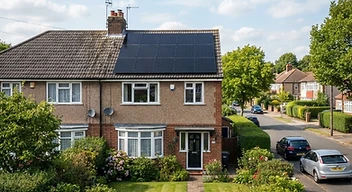
How Does Solar Power Work? A Guide for Luton, Dunstable and Stevenage
A plain-English guide to how solar panels, inverters and batteries work — and what that means for homes and businesses in Luton, Dunstable and Stevenage.